
How Many Cigarettes Are in a Disposable Vape Before You Buy One
A puff count is the easiest number to notice, but it is the wrong number to treat as a cigarette count. If you are asking wie viel zigaretten sind eine vape, the useful answer depends on nicotine strength, liquid volume, and how you actually inhale. As a rough pre-purchase check, a common 2 ml disposable at 20 mg/ml contains about 40 mg of nicotine in the liquid, often discussed as roughly 1–2 packs of cigarettes, not a carton.
The quick cigarette-to-vape answer, with the caveat that matters
There is no clean one-to-one conversion because cigarettes and disposable vapes deliver nicotine differently. A cigarette is finished in a short session. A disposable vape can be used in scattered pulls all day, which changes the rhythm of intake and can make the label feel less concrete than it looks.
For a simple calculation, use this formula:
Liquid volume in ml × nicotine strength in mg/ml = nicotine contained in the liquid.
Example: 2 ml × 20 mg/ml = 40 mg nicotine in the liquid. That does not mean your body absorbs all 40 mg. It does mean the device contains a nicotine pool that is large enough to deserve attention before you buy it, especially if you are comparing it with a pack of cigarettes.
A practical rule: do not compare 600 puffs with 600 cigarettes. Compare the nicotine label first, then use puff count only to estimate how quickly you might use the device.
Why puff count creates the biggest misunderstanding
Disposable labels often put puff count front and center because it is easy to understand. The problem is that a puff is not a standard dose. One person takes short, shallow pulls. Another takes longer, repeated pulls. The same labeled puff count can feel very different in real use.
With cigarettes, puff counting is also imperfect, but the session is more bounded. A pack of 20 cigarettes may represent roughly a few hundred inhalations depending on smoking style. That is why some comparisons say a disposable with several hundred puffs can look similar to one or more packs on a puff-count basis. But puff-count equivalence and nicotine equivalence are not the same thing.
| Label or number | What it can tell you | What it cannot tell you |
|---|---|---|
| Puff count | A rough idea of how long the device may last | How much nicotine you absorb per pull |
| Nicotine strength, such as 10 or 20 mg/ml | How concentrated the liquid is | How quickly you will use the device |
| Liquid volume, such as 2 ml | The amount of liquid available | Your daily intake pattern |
| Percentage, such as 2% | Usually another way of expressing concentration | A direct cigarette count by itself |
Decision rule: if you only have time to check one thing, check the nicotine concentration and liquid volume together. Puff count is secondary.
How to read a disposable vape label before you decide
Most confusion comes from mixing three separate label claims into one mental shortcut. Before buying any nicotine product, separate them like this:
- Nicotine strength: Often shown as mg/ml or as a percentage. For example, 20 mg/ml is commonly written as 2%.
- Liquid volume: The amount of e-liquid inside the device, often shown in ml.
- Puff count: A marketing-style estimate of possible pulls under certain conditions, not a dose guarantee.
The German Federal Institute for Risk Assessment, the BfR, is useful here because it explains e-cigarettes in a health and regulatory context rather than as a shopping claim. The BfR notes that nicotine-containing liquids are common and that tobacco law allows a maximum nicotine concentration of 20 mg/ml for liquids. That maximum concentration is important because it helps explain why 20 mg/ml or 2% labels are so common in regulated markets.
If a label says 2 ml and 20 mg/ml, the contained nicotine is about 40 mg. If it says 2 ml and 10 mg/ml, the contained nicotine is about 20 mg. Those numbers are not the same as absorbed nicotine, but they are the starting point for a responsible comparison.
A rough comparison table for common scenarios
The following examples are not medical dosing advice. They are a buyer-facing way to avoid the most common error: treating every disposable as if it equals either one cigarette or hundreds of cigarettes. The realistic answer sits between those extremes and changes with the label.
| Disposable label example | Nicotine in liquid | Practical cigarette comparison | Main caution |
|---|---|---|---|
| 2 ml at 20 mg/ml | About 40 mg | Often discussed as roughly 1–2 packs by nicotine-content comparison | Frequent short use can spread intake across the whole day |
| 2 ml at 10 mg/ml | About 20 mg | Lower than the 20 mg/ml example, but still not equivalent to a single cigarette | Lower strength can still add up if used often |
| High puff count with unclear liquid or strength | Cannot be calculated from puff count alone | Do not estimate from puffs only | Missing label details make comparison unreliable |
| Nicotine-free liquid | 0 mg nicotine | No nicotine-equivalent cigarette count | Still not the same as breathing clean air; aerosol exposure is a separate issue |
A useful buyer hesitation check: if the device contains nicotine and you would be uncomfortable buying the cigarette equivalent suggested by the nicotine calculation, pause and re-check the label. The math is not perfect, but it is better than relying on the puff number alone.
Why the same disposable can mean different intake for different people
Two people can buy the same labeled device and end up with very different exposure patterns. The difference is not only body chemistry; it is behavior.
Session use versus grazing use
A cigarette creates a defined session. A vape can be used without the same natural endpoint. That makes it easier to take a few pulls repeatedly, especially if the device is within reach. For someone trying to keep nicotine intake predictable, scattered use can be the bigger issue than the total label number.
Long pulls versus short pulls
Puff-count estimates usually assume a certain pull length and testing pattern. Longer pulls use more liquid. Shorter pulls may use less. This is why a device advertised for a certain number of puffs may not last as expected, and why the number of puffs does not translate neatly into cigarettes.
Nicotine strength changes the feeling of each pull
A lower-strength liquid used constantly may still produce substantial total intake. A higher-strength liquid used occasionally may result in a different pattern. The label gives the possible nicotine content; your use pattern determines how quickly you move through it.
If you want a deeper label calculation, the related guide Wie Viel Nikotin Hat Eine Vape in mg? breaks down mg, percentages, and liquid volume in more detail.
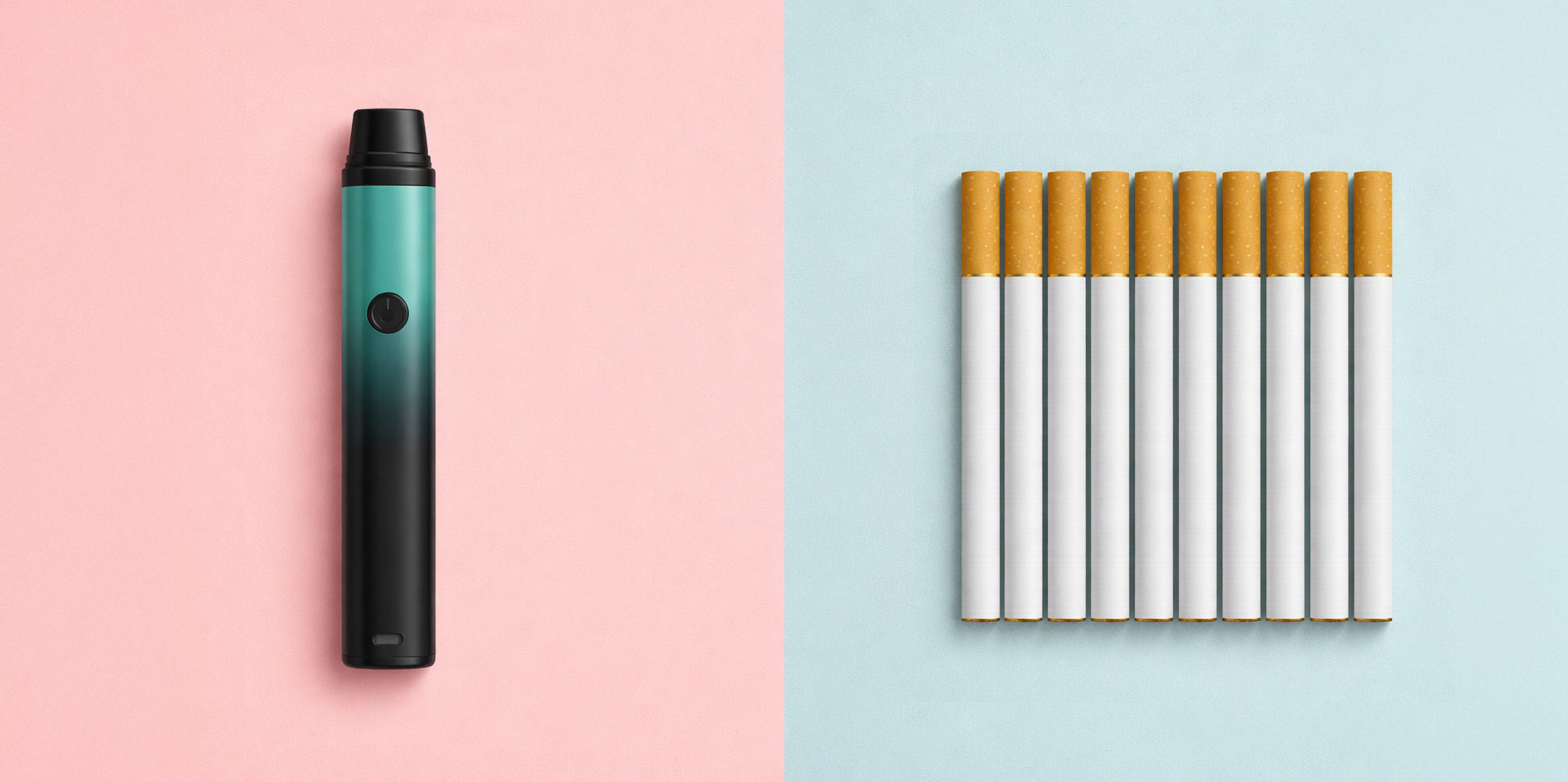
Is one disposable closer to a pack or a carton?
For the common 2 ml, 20 mg/ml example, it is more reasonable to think in the range of packs, not cartons. A carton usually means 10 packs, or 200 cigarettes. A typical small disposable nicotine calculation does not support that kind of direct comparison.
Where people get pulled toward exaggerated comparisons is puff count. A large puff number looks dramatic, but puffs are small actions, not cigarettes. If a cigarette involves multiple puffs, then a few hundred vape pulls may map to far fewer cigarette sessions than the raw number suggests.
Practical rule: if someone claims a disposable equals hundreds of cigarettes, ask what they are comparing. Are they comparing puff count, nicotine contained in the liquid, absorbed nicotine, cost, or duration? Those are different questions.
The health and compliance reality check
This article is not a medical recommendation, and nicotine products are not neutral consumer goods. Nicotine is addictive, and e-cigarette aerosol is not the same as clean air. The BfR page is worth reading because its framing is cautious: e-cigarettes are discussed as products with health considerations, not harmless lifestyle accessories.
At the same time, a cigarette-to-vape comparison can become misleading if it collapses every risk into one number. Cigarettes involve combustion. Vapes involve heated liquid and aerosol. The risks and exposures are not identical, so a nicotine-equivalent estimate does not tell the full health story.
For someone deciding before purchase, the most useful questions are more practical:
- Am I looking at a nicotine-containing device or a nicotine-free one?
- What is the mg/ml strength?
- How much liquid is inside?
- Will I use it in defined breaks, or keep pulling from it throughout the day?
- Am I using the puff count as a comfort number instead of checking nicotine content?
If the concern is relative harm rather than nicotine amount, the educational guide Zigaretten oder Vape looks at that comparison separately. Keep the two questions apart: nicotine equivalence is one issue; health risk is broader.
A simple pre-purchase checklist
Use this checklist before treating any disposable vape as equal to a certain number of cigarettes:
- Find the nicotine strength. If it is written as 2%, read it as roughly 20 mg/ml.
- Find the liquid volume. Without ml, you cannot calculate total nicotine in the liquid.
- Multiply strength by volume. This gives contained nicotine, not absorbed nicotine.
- Treat puff count as a usage estimate. It helps with duration, not dose precision.
- Consider your pattern. Occasional session use and all-day grazing are not the same.
- Be cautious with unclear labels. If the key numbers are missing or confusing, the cigarette comparison is guesswork.
If your main concern is how long a labeled puff count might last, not how much nicotine it contains, read Wie Lange Hält Eine Vape in Days? or Wie Viele Züge Hat Eine Vape?. Those questions overlap with this one, but they are not identical.
FAQ: cigarette equivalents and disposable vapes
Does 600 puffs mean 600 cigarettes?
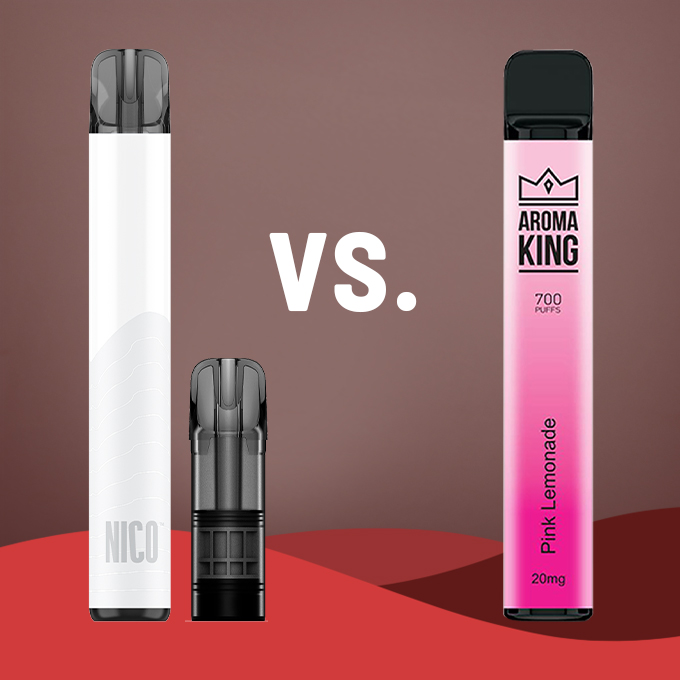
No. A cigarette usually involves multiple puffs, and vape puffs vary in length and intensity. A 600-puff label is a rough device-use estimate, not a cigarette count.
How many cigarettes is a 2 ml, 20 mg/ml disposable?
It contains about 40 mg of nicotine in the liquid. As a rough orientation, that is often discussed around the level of 1–2 packs of cigarettes, but it is not an exact absorbed-dose match.
Is 2% nicotine a lot?
In vape labeling, 2% usually means 20 mg/ml. That is at the commonly cited maximum concentration allowed for liquids under tobacco law in the BfR overview, so it should not be dismissed as a tiny number.
Can a lower-strength vape still add up?
Yes. Total intake depends on both concentration and how often you use it. A lower-strength device used frequently can still represent meaningful nicotine exposure.
What if the device is nicotine-free?
Then there is no nicotine-equivalent cigarette count. That does not automatically answer broader health questions, because aerosol exposure is separate from nicotine content.
The bottom line before you buy
The cigarette comparison is useful only if you base it on the label numbers that matter. Start with mg/ml and ml, calculate the nicotine contained in the liquid, and treat puff count as a rough duration claim. For many common disposable examples, the comparison lands closer to packs than to individual cigarettes, but the exact answer changes with strength, liquid volume, and use behavior.
If the label makes you pause, that pause is doing its job. Nicotine math is not about finding a perfect conversion; it is about avoiding a casual purchase based on an incomplete number.
Related Guides in best vape
These related guides connect this article to the site's broader topic map.
- Wie Viel Nikotin Hat Eine Vape in mg? The Simple Conversion Buyers Need
- Wie lange braucht eine Vape zum Laden? The Real Timing Buyers Need
- Wie teuer ist eine Vape? 5 Price Traps New Buyers Miss
- Wie Viel Kostet Eine Vape for Beginners? Starter Kits vs Disposables
- How Many Cigarettes Is a Vape Really? Nicotine vs Puff Count Explained
- Wie funktioniert eine Vape Safely? First-Use Mistakes to Avoid
- Wie Lange Hlt Eine Vape in Days? Why Puff Counts Can Mislead Buyers
- Wie Viele Zge Hat Eine Vape Before Flavor and Battery Drop Off?
- Zigaretten oder Vape: The Harm-Reduction Claim Worth Checking First
- Was Ist Eine Vape Zndung? Auto-Draw vs Button Firing Explained
- Vape oder Zigaretten: 5 Misconceptions That Can Skew Your Choice
- Was Kostet Eine Vape Monthly? The Hidden Refills Buyers Forget


