
E-Cigarettes vs. Traditional Cigarettes: Health Risks and Benefits
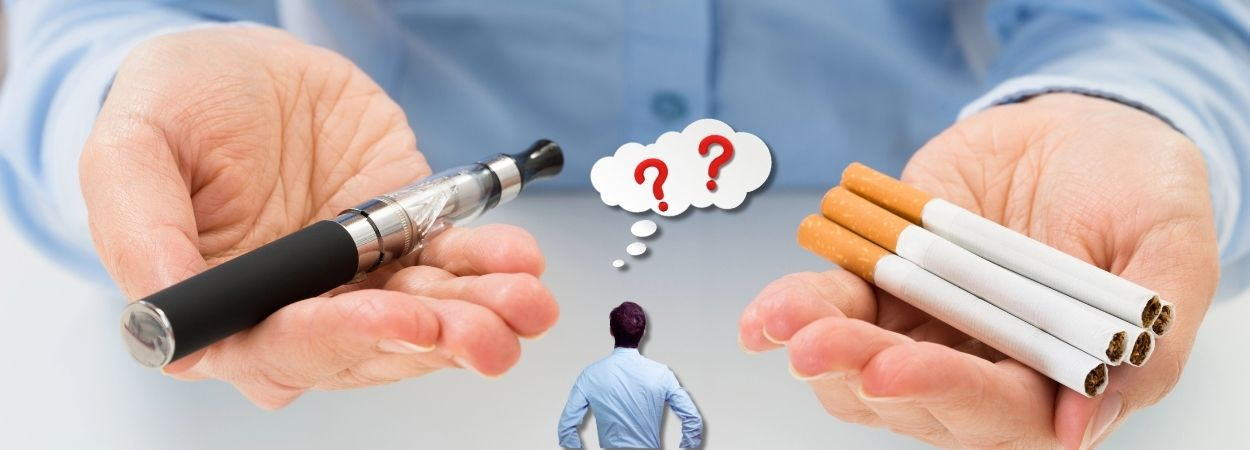
If you are weighing a puff or cigarette for health reasons, the most useful short answer is this: smoking tobacco is generally the more harmful exposure, but vaping is not “healthy” and the unknowns matter. E-cigarettes avoid burning tobacco, which likely reduces many toxic substances, yet the aerosol, nicotine, flavourings, and unregulated additives can still create health risks. The real decision is not “safe or unsafe,” but “less harmful for whom, under what conditions, and compared with what?”
The practical health comparison: less smoke does not mean no risk
Traditional cigarettes burn tobacco. That combustion process is a major reason cigarettes are so damaging: smoke exposes the lungs and cardiovascular system to a complex mix of toxic substances. E-cigarettes work differently. They heat a liquid into an aerosol, so the exposure profile is not the same as smoke from a tobacco cigarette.
That difference is why health discussions often describe e-cigarettes as likely less harmful than traditional cigarettes for people who already smoke and fully switch. A Barmer health fact check summarizes the position that e-cigarettes are very likely significantly less harmful than tobacco cigarettes, while still noting risks around liquid additives. Similarly, medical commentary has described vaping as not healthy, but substantially less harmful than smoking for an existing smoker who switches completely.
For a non-smoker, the comparison changes. If the baseline is no nicotine product, vaping adds avoidable exposure. For a smoker, the key health question is whether vaping replaces cigarettes or simply gets added on top. Dual use—smoking some cigarettes while vaping at other times—can preserve much of the cigarette-related risk.
| Question | Traditional cigarettes | E-cigarettes | What it means for the reader |
|---|---|---|---|
| Main exposure | Smoke from burning tobacco | Aerosol from heated liquid | Vaping changes the exposure, but does not remove all toxicity concerns. |
| Relative health impact | Well-established serious harm | Likely lower harm than smoking, but not harmless | Switching completely may reduce harm; starting vaping from non-use adds risk. |
| Long-term evidence | Extensive long-term evidence | Still developing | Be cautious about confident claims that vaping has no long-term consequences. |
| Key uncertainty | Risk is already clear | Long-term lung, cardiovascular, and cancer outcomes remain less certain | Look for updated public-health guidance, not just marketing language or anecdotes. |
What health risks are linked with e-cigarettes?
The main mistake is to treat vaping as either equivalent to smoking or completely harmless. The more accurate middle ground is that e-cigarettes may reduce some harms compared with traditional cigarettes, but they still expose users to substances the lungs were not designed to inhale.
Possible health risks include irritation or stress to the airways, effects from nicotine, exposure to flavouring additives, and toxic by-products that may vary by liquid, device use, and heating conditions. Public concern is not imaginary: a representative survey cited by InnoCigs in its overview of the study situation reported that 84% of people associated e-cigarette use with serious risks such as lung damage or cancer. The exact level of risk is debated, but the concern reflects a real evidence gap rather than simple panic.
Lung damage is the risk most people think about first because vaping delivers aerosol directly into the respiratory tract. Even if fewer harmful substances are present than in cigarette smoke, repeated inhalation of aerosol and additives can still be a concern for people with asthma, chronic bronchitis, COPD, or other respiratory vulnerabilities. If symptoms such as chest tightness, wheezing, persistent cough, or shortness of breath appear after vaping, that is a medical question, not a flavour or device preference issue.
Cancer risk is harder to state neatly. Cigarette smoking has a long and well-documented cancer burden. For e-cigarettes, the long-term cancer evidence is not as mature because widespread use is more recent. A responsible conclusion is therefore limited: vaping likely reduces exposure to many toxic substances associated with combustion, but that does not prove zero cancer risk over decades.
What is actually in e-cigarette liquid?
Most health debates about vaping eventually come back to the liquid. E-cigarette liquids typically involve a base liquid, flavouring substances, and, in many cases, nicotine. Some liquids are marketed as nicotine-free, but “without nicotine” should not be read as “without health risk.” The lungs still encounter heated aerosol and additives.
Nicotine is the dependence driver in many e-cigarette liquids. It can reinforce frequent use and make it harder to stop. For people trying to leave cigarettes behind, nicotine may be part of the reason vaping feels like a workable substitute; for non-smokers, it can create a new dependency with no harm-reduction benefit.
Additives and flavourings deserve special attention because they are a major source of uncertainty. A flavouring may be acceptable in food but not well studied for repeated inhalation after heating. This distinction matters: swallowing an ingredient and inhaling it as an aerosol are not the same exposure.
For anyone evaluating health impact, the most useful habit is ingredient scepticism. Check whether nicotine content is clearly stated, whether additives are listed, and whether the source is regulated and transparent. Avoid self-mixed or informal liquids where the composition cannot be verified. The less you know about the liquid, the less confident you can be about its toxicity profile.
Why long-term studies still leave unanswered questions
One of the biggest decision blockers is the lack of long-term evidence. Traditional cigarettes have been studied for many decades. E-cigarettes have not had the same length of observation across large populations and across different devices, liquids, nicotine strengths, and patterns of use.
This does not mean researchers know nothing. Available comparisons often suggest that e-cigarettes expose users to fewer harmful substances than traditional cigarettes, and some summaries report fewer respiratory diseases among vapers than smokers. But those findings do not close the case on long-term health effects. Lung disease, cardiovascular disease, and cancer can develop over long periods, and the vaping market changes quickly enough that older research may not perfectly describe current liquids or devices.
The best way to read the evidence is in layers:
- Short-term exposure: vaping avoids tobacco combustion, which is a meaningful difference from smoking.
- Medium-term symptoms and markers: research can compare respiratory symptoms and toxic exposure, but results depend on who is studied and whether they also smoke.
- Long-term disease outcomes: evidence is still less complete, especially for people who vape for many years without ever having smoked.
Be cautious with absolute claims on either side. “Just as bad as cigarettes” oversimplifies the reduced-combustion exposure. “Completely safe” ignores the unresolved evidence on long-term effects, additive toxicity, and repeated inhalation.
Can e-cigarettes help with quitting smoking?
E-cigarettes may help some smokers reduce or stop traditional cigarette use because they can replace the hand-to-mouth behaviour and nicotine delivery of smoking. This is the harm-reduction argument: for someone who already smokes, completely switching away from tobacco cigarettes may reduce exposure to many harmful combustion products.
The word “completely” is important. If vaping becomes an add-on rather than a replacement, the health benefit can shrink. A person who smokes in the morning, vapes indoors during the day, and smokes again in the evening is still maintaining cigarette exposure. For quitting, the practical goal should be a clear reduction plan rather than an open-ended second habit.
People using e-cigarettes as a cessation aid should also think about support, not just substitution. A quit plan, a target date, professional advice, and a strategy for eventually reducing nicotine can matter more than the device itself. If previous quit attempts failed, medical or counselling support can help address cravings, triggers, and relapse patterns.
For non-smokers, the cessation argument does not apply. Starting to vape for curiosity, flavour, social use, or stress relief introduces avoidable exposure and possible dependence. Harm reduction is a comparison against smoking, not a general wellness claim.
Second-hand exposure: what about people nearby?
Passive exposure is often discussed less clearly than direct use. E-cigarette aerosol is different from cigarette smoke, but “different” does not mean irrelevant. People nearby may still be exposed to exhaled aerosol, nicotine if present, and other substances from the liquid.
The practical rule is simple: do not assume vaping around others is harmless, especially around children, pregnant people, people with asthma, or anyone who has asked you not to. Even where the risk is likely lower than second-hand cigarette smoke, courtesy and caution point in the same direction: keep indoor shared air clean.
A decision framework for “puff oder zigarette gesundheit” searches
Many people searching for “puff oder zigarette gesundheit” are not looking for a lecture; they want to know which choice carries less health risk. Use the answer based on your starting point:
- If you do not smoke: do not start vaping as a “safer” habit. Safer than smoking does not mean beneficial compared with non-use.
- If you smoke and cannot quit immediately: completely switching from cigarettes to vaping may reduce harm, but it should ideally be part of a broader quit strategy.
- If you both smoke and vape: focus first on eliminating cigarettes, because continued tobacco smoke exposure keeps the largest known risk in place.
- If you use nicotine-free liquids: still check ingredients and avoid unregulated additives. Nicotine-free is not the same as aerosol-free or risk-free.
- If you have lung or heart symptoms: do not self-diagnose the cause. Stop exposure and seek medical advice, especially for breathing problems or chest symptoms.

FAQ: common concerns that change the answer
What are the main health risks associated with e-cigarettes?
The main risks are repeated inhalation of aerosol, nicotine dependence, exposure to additives and flavourings, and uncertain long-term effects on the lungs, heart, and cancer risk. The risk profile is likely lower than smoking for many existing smokers who switch completely, but it is not zero.
How do e-cigarettes help in quitting smoking?
They may help some smokers by replacing cigarette routines and nicotine intake without burning tobacco. Their usefulness depends on whether they actually replace cigarettes, whether dual use is avoided, and whether the person has a plan to reduce dependence rather than continue indefinitely.
Are non-nicotine e-cigarette liquids safe?
They may avoid nicotine dependence, but that does not prove they are safe. Non-nicotine liquids can still contain flavourings and additives, and long-term inhalation effects are not fully settled. Ingredient transparency and regulated sourcing matter.
The practical takeaway
Traditional cigarettes carry the clearer and greater established health burden. E-cigarettes are likely less harmful for smokers who switch completely, but they are not a harmless alternative and should not be treated as safe for non-smokers. The smartest next step is to compare your real baseline: no use, smoking, vaping, or dual use. Then reduce the highest-risk exposure first, avoid unclear liquids and additives, and seek support if nicotine dependence is keeping you stuck.
Related Guides in best vape
You can refer to similar articles..
- Puff vs. Pod: Making the Right Choice for Your Vaping Needs
- Top Rechargeable Puff Brands in Europe for 2025: A Comprehensive Guide
- Is a High Puff Disposable Vape Worth It? Costs, Battery, and Flavor
- Why a 10000 Puff Disposable Vape May Not Last as Long as Expected
- Before Buying a 20000 Puff Disposable Vape, Check These 7 Things
- Choosing the Best 20,000 Puff Vape: Features, Flavors, and More
- Choosing Your First Puff: A Beginner's Guide to Vaping
- JNR 16k Puff: Features, Comparisons, and Cost-Effectiveness
- Maximize Home Lighting with LED Puff Lights: Benefits and Options
- Choosing the Right Puff Count: 10K, 20K, or 40K?
- Best Prices and Features for Puff 20,000 & 25,000 in France
- Avoiding Common Mistakes: A Beginner's Guide to Visiting a Puff


